
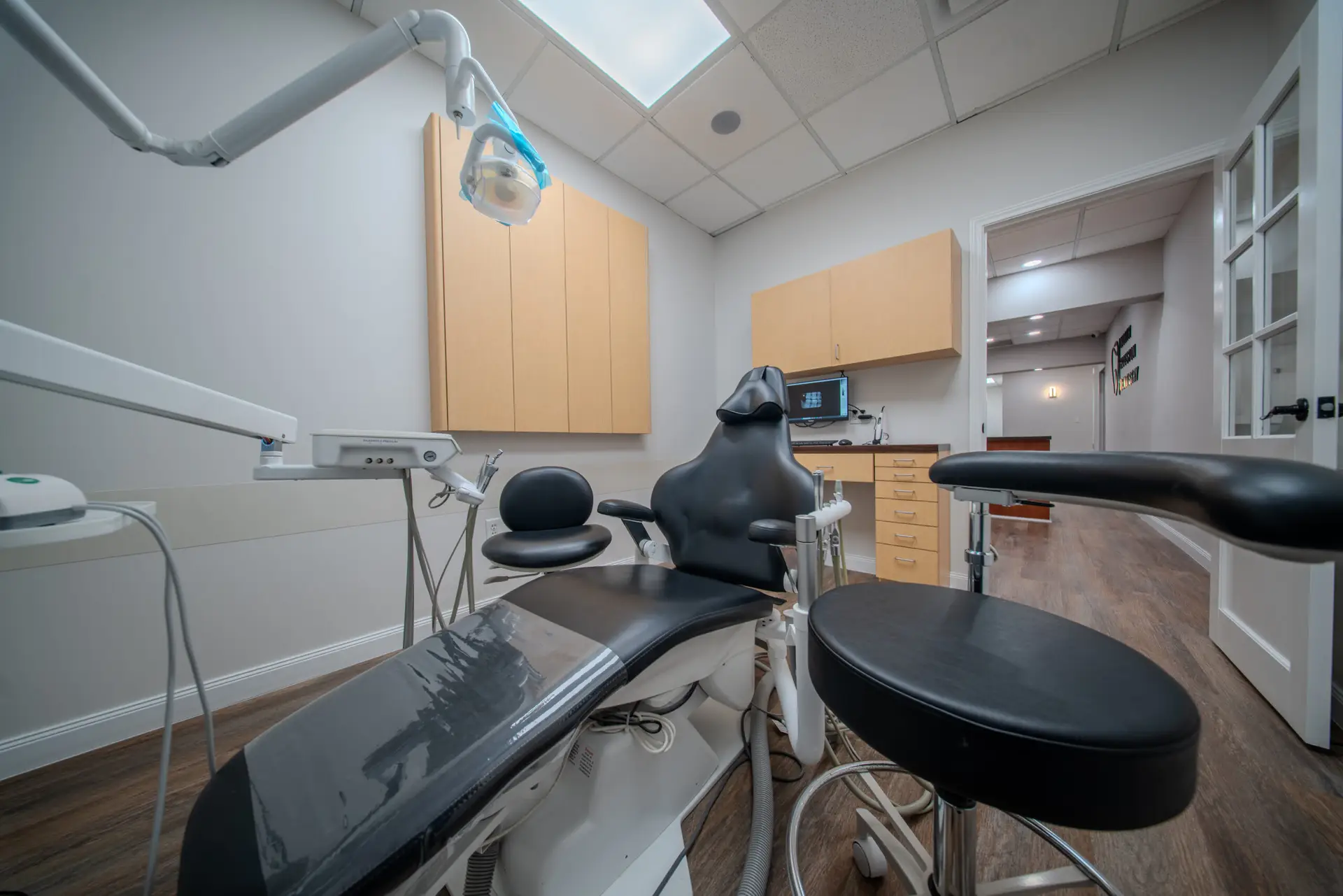
What a Preventive Dental Visit Covers in North Houston
What happens at a checkup and cleaning at North Houston Dentistry in Cypress Station, what to bring, and how to book.
A preventive visit at North Houston Dentistry in Cypress Station covers a gum pocket check, digital images, a cleaning and polish, and an exam that includes an oral cancer screening. Dr. Sasan Bastani shows you your X-rays on a screen and explains what he found, and what it costs, before anything starts.
Key takeaways
- Every cleaning visit runs in the same order: gum pocket measurements, digital images, then an ultrasonic cleaning and polish.
- You see your own X-rays on a chairside monitor and hear your gum numbers. A deep cleaning only comes up when the measurements call for one.
- New patients can fill in their forms online before arriving and leave with an itemized, printed plan.
- The office checks your insurance benefits before your visit, free. It accepts most major PPO plans, Medicaid, CHIP and eligible DentaQuest plans.
- To book, call (281) 866-0049 or send the appointment request form. The team speaks English and Spanish.
What a preventive visit covers
The office describes its cleaning and exam visit as a three-part exam that runs the same way every time, with the team telling you what they are doing as they do it.
- Pocket-depth check. A small probe reads the gap between each tooth and gum in millimeters. Healthy gums read 1 to 3, and you are told your number.
- Digital cavity scan. Digital images and scans catch early decay and bone changes before they hurt or show up on a regular look.
- Ultrasonic cleaning. A vibrating tip and a stream of water loosen plaque and tartar with light contact, followed by a polish.
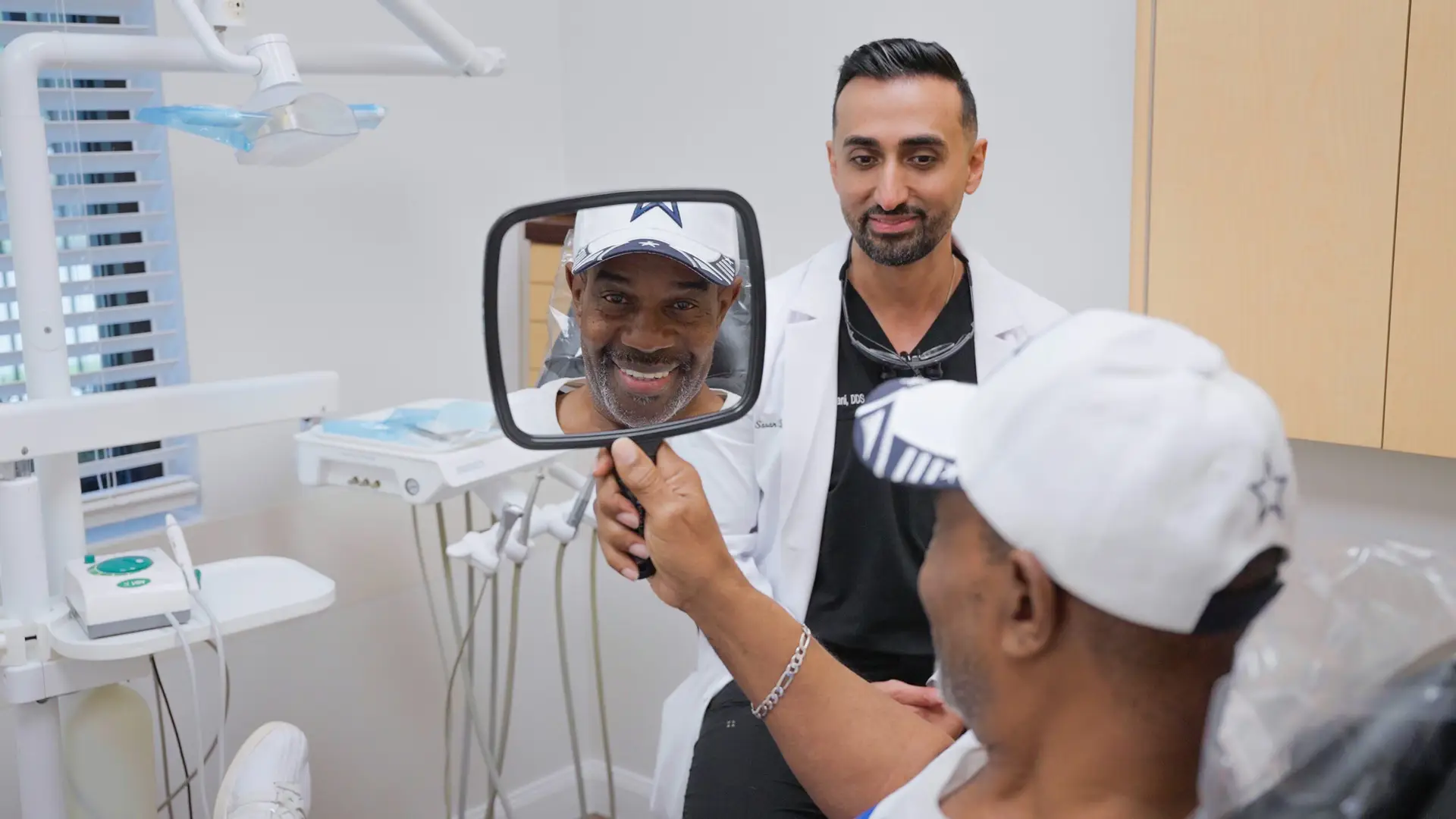
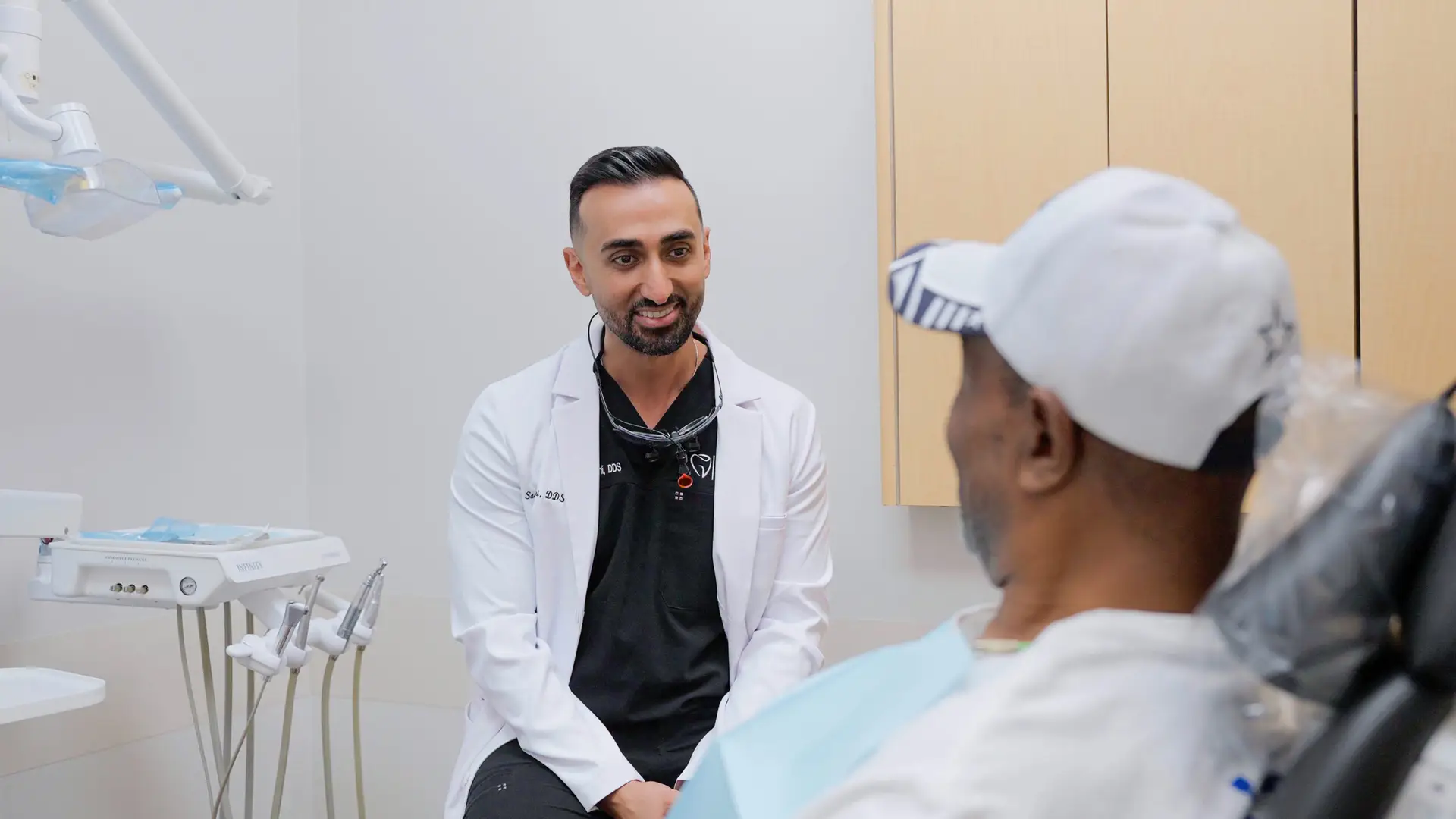
The comprehensive exam is a full check of your teeth and gums and includes an oral cancer screening. Your X-rays go up on the screen and Dr. Bastani walks through them with you, so you see what he sees.
Two more preventive services are listed on the office's preventive dentistry page: dental sealants, a thin protective coat on the back teeth, and deep gum therapy (scaling and root planing) for early gum disease, done in stages.
If it is your first visit
The new patient page lays out four steps:
- Check in from your phone. You fill out your Flex Dental intake forms online before you arrive.
- A quick scan. A low-radiation digital panoramic X-ray and a gum screening give the full picture.
- A real conversation. You sit one-on-one with Dr. Bastani while he reviews your scans with you on the chairside monitor.
- Your plan in writing. You leave with an itemized, printed plan that shows what is needed, what can wait, and what each item costs.
The office's rule for a first appointment is "we talk before we touch": it starts with your concerns and goals, before any exam or treatment. If it has been years since your last visit, the office says plainly that there is no judgment and that it starts where you are.
Standard cleaning or deep cleaning?
The pocket measurements decide this.
- Standard cleaning. For healthy gums that read 1 to 3 millimeters with no bleeding or swelling. It removes plaque and tartar above the gumline and ends with a polish.
- Watch zone. At 4 millimeters, the office watches the area from visit to visit.
- Deep cleaning (scaling and root planing). For pockets that read 5 millimeters or deeper, plus bleeding or swelling. It removes buildup below the gumline and smooths the roots. The office includes numbing for comfort and a follow-up check.
A deep cleaning treats early gum disease. It is not a premium version of a routine visit, and the office says it recommends one only when your measurements and symptoms show it is needed. The 1 to 3 millimeter range for healthy gums matches what the National Institute of Dental and Craniofacial Research describes on its gum disease page.
Preventive visits for children
The office sees children from the first tooth through the teen years. A typical children's visit has four parts:
- A checkup and cleaning, done at the child's pace
- Fluoride varnish
- Dental sealants on the back molars
- For the youngest children, a short first visit so the chair feels familiar
Visits follow a tell, show, do routine. The team explains each step in words a child understands, lets the child see and touch each tool, and only then starts, with breaks whenever the child wants one.
For timing, the office suggests a first visit by the first birthday or within six months of the first tooth. That matches the American Academy of Pediatric Dentistry, which says a child should be seen when the first tooth appears, or no later than the first birthday.
Parents can ask for a family block when booking, and the office will schedule everyone back to back in one trip.
What to bring and how to prepare
These steps make the visit quicker:
- Finish your forms online. New patients receive Flex Dental intake forms to complete before arriving.
- Have your insurance plan name ready. The appointment form has a space for it, and the office uses it to check your benefits before you come in.
- Know your medicines and health conditions. The American Dental Association notes that a checkup starts with questions about your recent medical history, so a current list of medicines helps.
- Ask about earlier X-rays. If another dentist took X-rays recently, mention it when you book.
- Write down your questions. The first part of the visit is a conversation, so bring anything you want looked at or explained.
Insurance and payment
Before your appointment, the office contacts your plan, confirms your estimated out-of-pocket cost and walks you through it. The check is free, and nothing starts without your yes.
Insurance accepted, per the website: most major PPO plans, Medicaid, CHIP and eligible DentaQuest plans. What your own plan pays depends on the plan, which is the reason for the benefits check.
No insurance: the office publishes its cash fees on the pricing and insurance page, so you can see them before you book.
Larger treatments can be spread out with a payment plan through Cherry. Whether or not you have insurance, you receive a written estimate before any treatment.
How to book
- Call (281) 866-0049. This is also the right choice if you are in pain; the office asks people who are hurting to call instead of using the form.
- Send the form. Use the appointment request form and choose "Checkup and cleaning" or "Children's visit." The front desk calls or texts you back, checks your plan, then books the visit.
- Email info@northhoustondentistry.com.
The office is at 1125 Cypress Station Dr, Suite A1, Houston, TX 77090, off FM 1960. Hours are Monday to Thursday 9:00 to 4:00 and Friday 9:00 to 1:00. The team is bilingual in English and Spanish. Se habla español.
How often to come back
The office's own guidance is that most adults do best with a cleaning and exam every six months, and that people with gum concerns may be asked to come every three to four months. It bases the schedule on your measurements, not a blanket rule.
That is in line with the American Dental Association, which says there is no one-size-fits-all schedule: some people need one or two visits a year and others need more. This article is general information, not a diagnosis, so follow the schedule your dentist gives you after your exam.
Frequently asked questions
Do I need insurance to come in for a checkup?
No. The office prepares a printed estimate either way. Patients without insurance pay the published cash fees, and the new patient exam and digital X-rays are free.
Who will I see at my visit?
Dr. Sasan Bastani, DDS. He owns the practice, leads every exam and explains your options himself. He studied public health at the University of Houston and earned his DDS at the UT School of Dentistry at Houston. You can read more about Dr. Bastani.
Is the ultrasonic cleaning uncomfortable?
The office says most people find it comfortable. If your gums are sensitive or you have deep pockets, the team can numb the area first. Tell them how you are feeling and they adjust as they go.
How do I know if I need a deep cleaning?
The pocket measurement is the real test. Bleeding when you brush or a bad taste that does not go away are common signs, but the office recommends a deep cleaning only when pockets read 5 millimeters or deeper and there is bleeding or swelling.
Can my children and I be seen on the same day?
Yes. Ask for a family block when you book. The office schedules everyone back to back and tells you how much time to set aside.
Is the visit available in Spanish?
Yes. The bilingual team serves English and Spanish speaking families.
Related reading
Keep reading
More from our blog
More plain-language answers from our Cypress Station office.


Come see your X-rays, then decide for yourself.
One visit and one clear explanation, plus a written estimate. Then you decide.
FM 1960, near Cypress Station. Mon–Thu 9:00–4:00, Fri 9:00–1:00.